Search This Blog

Monday, April 25, 2011

What’s The Deal with McNeil’s Consent Decree?

Written by Clinton Ballard - Validation Specialist, QPharma

After nearly 2 years of recalls totaling more than 47 million units of very popular over the counter (OTC) drugs (Sudafed, Tylenol, Rolaids, Sinutab Sinus, Benadryl, Motrin, and Zyrtec) on March 10, 2011 McNeil-PPC, Inc. subsidiary of Johnson & Johnson Services, Inc. (J&J) signed a consent decree with the FDA covering manufacturing facilities in Las Piedras, PR, Fort Washington, PA, and Lancaster, PA.

The details of the Consent Decree requires McNeil to destroy all drugs under their control that have been manufactured or recalled from the Fort Washington, Las Piedras, and Lancaster facilities since December 2009 to the date of entry of the Consent Decree. McNeil is allowed to continue manufacturing operations in the Las Piedras, PR and Lancaster, PA facilities but manufacturing and distributing drugs from its Fort Washington, Pa., facility is prohibited until the FDA determines that its operations are compliant with federal regulations. McNeil must comply with a stringent corrective action plan across all three sites set forth by the FDA. The full details of the corrective action timetable are outlined in the Consent Decree. The key arrangements of the Consent Decree requires that McNeil establish and implement a quality assurance / quality control (QA/QC) program that is applicable to cGMP regulations and in coordination with J&J’s corporate level QA/QC program. McNeil is also required to hire an independent cGMP expert to: inspect all three facilities to determine whether the violations the FDA found during their audits have been corrected, ensure that proper manufacturing processes are in place, and verify that the agreements made in the Consent Decree are met. After certification from an independent expert, the FDA will determine if the facilities are in compliance. If McNeil maintains all three facilities in a state of continuous compliance with applicable regulations and the Consent Decree for at least sixty (60) months they may petition the courts for relief from the Consent Decree. 

McNeil is required to pay the cost of all of the FDA investigative expenses while under consent decree. As of the date of entry of the Consent Decree the cost of FDA inspection is $87.57 / hour, the cost for any laboratory work is $104.96 / hour, and $0.51 / mile for travel. If McNeil violates the agreements of the Consent Decree, the FDA can order McNeil to cease all manufacturing, recall products, and take other corrective action, including levying fines of $15,000 for each day and an additional $15,000 for each violation of the law, up to $10 million annually.  

 J&J will end up paying a nice chunk of change for their McNeil sites’ failure to comply with federal regulations. But, considering the repeated recalls and how long the FDA has been telling McNeil, to clean their act up McNeil got off rather easy based on the agreements of the Consent Decree. McNeil is not required to cease production of any of their recalled products which is usually agreed upon in most FDA consent decrees. McNeil was also able to circumvent paying a hefty disgorgement fee like Schering-Plough who signed a consent decree with the FDA and was required to pay $500 million dollars to the United States Treasury back in 2002. J&J CEO, Bill Weldon was also not listed as a defendant on the Consent Decree but in past consent decrees involving Schering-Plough, Abbott Laboratories and Genzyme the CEO was listed as a defendant. In McNeil’s case the Vice President (VP) of quality and the VP of operations for OTC products are listed as the defendants. Essentially this Consent Decree is a slap on the wrist for McNeil and merely shines light on the implicated McNeil sites’ lack of commitment to “high quality” as stated in the J&J’s corporate company credo.

J&J is a leader in the healthcare product industry, reporting $61.6 billion in sales for 2010. OTC pharmaceutical sales made J&J $4.6 billion in 2010 accounting for 7.7% of their total sales. Recalls were estimated to have cost J&J $900 million in sales in 2010. Considering the amount of money on the line and the brand J&J has created with their McNeil Consumer Healthcare product division it would not be in the company’s or stockholders best interest to not come out of this Consent Decree as a transformed company with a newfound commitment to the J&J Credo. 

The transformation has already begun. Recently J&J has announced that they will be splitting the McNeil Consumer Healthcare unit up into divisions by geography and product type, allowing for more focus on consumer drug operations. Under this new infrastructure, the product lines will be organized into four categories: OTC drugs, skin care, oral care and women's health. The regional divisions: Asia-Pacific, North America, Europe/Middle East/Africa and Latin America will market all of the product lines.

Fortunately J&J can afford the cost of coming out of a FDA consent decree, but do they have the necessary internal McNeil leadership and support required to guide them out of this Consent Decree is a question that only time can answer. Stay tuned as we continue to monitor J&J’s attempt to come out of this Consent Decree.

Tuesday, April 19, 2011

Frankenfish Part 2

Written by Paul Melamud - Validation Manager, QPharma

Continued ...


ANSWERING THE QUESTION – HOW FDA REGULATES THIS PRODUCT


The question posed at the start of this article asked you to try to figure out as what kind of product FDA regulates this salmon.  Most people say “food”, because of course this fits the definition in 21 USC 321(f):

  
The term "food" means (1) articles used for food or drink for man or other animals, (2) chewing gum, and (3) articles used for components of any such article.

While this salmon is most certainly a food, it is not regulated as such, because this product is much more than that (as we will see in a minute).  It is also worth noting that food producers (such as farms) and processed food manufacturers do not need to do anything other than register with FDA – there is no formal pre-marketing review/approval process. 
 

And I can hear now “but surely I am partially correct, this must be some sort of combination product!” – and to be honest, I agree with that in spirit.  Frustratingly, the definition in 21 CFR 3.2 for combination products (which stems from 21 USC 353(g)(1)) excludes food as a component of a combination product!  The likely explanation for this is that this concept was intended to reflect only therapeutic products with differing approval pathways.  Perhaps this definition will be updated if AquaBounty’s salmon is approved.  Anyway, no, you can’t win this argument with me on a technicality, either =).
 

So how is this product regulated?  Let’s look at the other types you were given to choose from:
 

This product cannot be a dietary supplement, which (summarized from 21 USC 321(ff)) is considered a type of food that contains a vitamin, mineral, herb or other botanical, amino acid, or some other type of ingredient to supplement the diet by increasing total dietary intake.
 

This product is also not a cosmetic, which is defined in 21 USC 321(i) as an article intended to be applied to the human body “for cleansing, beautifying, promoting attractiveness, or altering the appearance”, although this technically does not include soap (and our fishy friend is obviously not a soap, either!).
 

So – is this a drug, biologic, or medical device, and then, “human” or “animal”?  Have you figured it out yet? 
 
Let’s look at a boiled down version of the definitions:

1.  Drugs (human and animal) are ALL of the following (per 21 USC 321):
  • Recognized in an official compendium (like the USP/NF)
  • Intended for use in diagnosis, cure, mitigation, treatment, or prevention of disease in man or   other animals, and/or a product that affects the structure or any function of the body of man or other animals

2.  Medical Devices (human or animal) are ALL of the following (per 21 USC 321):
  • Recognized in an official compendium (like the USP/NF)
  • Intended for use in diagnosis, cure, mitigation, treatment, or prevention of disease in man or other animals
  • A product that does not achieve its primary intended purposes through chemical action within or on the body of man or other animals and which is not dependent upon being metabolized for the achievement of its primary intended purposes.
3.  Biologic products are ALL of the following (per PHSA 21 USC 262, referenced to by FDA in 21 CFR 3.2):
  • A virus, therapeutic serum, toxin, antitoxin, vaccine, blood, blood component or derivative, allergenic product, protein (except any chemically synthesized polypeptide)… (or any other trivalent organic arsenic compound)
  • Applicable to the prevention, treatment, or cure of a disease or condition of human beings
The trick to answering this question lies in understanding that regardless of the final use of the product, the genetic change to the animal is also subject to FDA regulation because it fits one of the definitions.  Specifically, if you take a salmon egg, change its structure (by adding DNA) and function (salmon grows faster), and then later use that salmon for food, then of the three types above, only “drug” is defined by a chemical change that alters the structure and function of a body.  From there, as this is a change to an animal and not a human, “animal drug” is your correct answer – this product is regulated as a new animal drug.
 
The Center for Veterinary Medicine (CVM) is indeed responsible for the regulation of GE animals, whether they are intended for human consumption or not.  As of today, there are no CFRs for GE products, and only one guidance document (approved 01/2009):

  
CVM GFI #187 Regulation of Genetically Engineered Animals Containing Heritable Recombinant DNA Constructs (PDF - 128KB).

FINAL THOUGHTS
 
The three days of meetings provided plenty of criticism of the science used by the FDA to determine that the GE salmon is safe, as well as of the legal arguments that would not require special labeling of the salmon as “Genetically Engineered”.  Critics call this modified salmon a “Frankenfish” that could cause allergies in humans and the eventual decimation of the wild salmon population. 
 
Will the public have an appetite for this product?  GE is already widely used for crops, but the government until now has not considered allowing the consumption of modified animals.  Although the potential benefits – and profits – are huge, many people have qualms about manipulating the genetic code of other living creatures.
 
But what do the leaders at FDA, the Department of Health and Human Services, and even the White House, want? The approval of the GE salmon, as of now, could go either way. 
 
What do you think?  Would you eat a piece of salmon if you knew it was one of these genetically engineered variety?  If you would knowingly avoid it, would you care at all if you found out after the fact?  Do you think the benefits outweigh the risks?
 

Tuesday, April 5, 2011

Frankenfish Part 1

Written by Paul Melamud - Validation Manager, QPharma

INTRODUCTION
Sometimes, I don’t think FDA is given enough credit.  Yeah, I know it’s always fun to armchair-quarterback their decisions and policies, or to scoff “how could they let that happen”s at some company’s shenanigans… But every once in awhile, they get something really cool to play with, and they give the science (and the company) a legitimate chance to justify themselves.  And if you’re working for one of these groundbreaking, innovative sorts of companies, then you’ll agree it’s important to be able to figure out what kind of product your new “something” is, so you can start the laborious process of getting it approved the right way.

In that regard, I’m going to tell you a little story about salmon eggs, and the part I find most interesting is how FDA regulates this product.  Do you think you can figure it out before I spill the answer?  Let’s limit your choices – is this product regulated as a food, dietary supplement, human drug, animal drug, therapeutic biologic product, cosmetic, or medical device?

Let’s take a step away for a moment, though.  As the world’s populations grow, fishing and hunting increase to meet rising demand (among other things, of course), and, as history shows, this can lead to depopulation, extinction of species, habitat destruction, and environmental activists sabotaging boats. 

As you likely know, farming in general has been a dying art, subject to higher regulations and costs of doing business, and many are on the verge of collapse, unable to make a profit while trying to meet such high market needs.  Consider the delicious world of aquaculture (AKA “fish farming”, AKA “the Blue Revolution”) for example, which is able to fulfill around 50% of the world’s piscine appetites and thereby circulates around $80B dollars.

In an effort to thwart these depressing factors, scientists have been teaming up with farmers to create new products that should help provide equal or more of the product at lower cost and impact.  It is with one of these products that I start my story of roe.

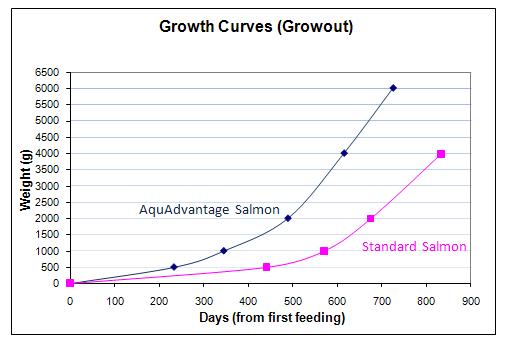
ENTER THE FRANKENFISHAs recently as this past October, the government held three days of meetings about whether to approve AquaBounty’s AquAdvantage® salmon – a transgenic species whose eggs are genetically engineered (GE) to grow twice as fast – for human consumption.    Some people have been referring to this product as the “Frankenfish”.

AquaBounty intends to market this product, making the following claim in its FDA application:
“AquAdvantage® Salmon (AAS) reach market size twice as fast as traditional salmon. This advancement provides a compelling economic benefit to farmers (reduced growing cycle) as well as enhancing the economic viability of inland operations, thereby diminishing the need for ocean pens. AAS are also reproductively sterile [except for the small breeding stock maintained in land, which eliminates the threat of interbreeding amongst themselves or with native populations, a major recent concern in dealing with fish escaping from salmon farms.  AAS grow faster and reach mature size earlier than standard salmon, but they do not grow to be larger. Mature AAS are indistinguishable from their conventional counterparts.”

The website www.eatocracy.com has provided an excellent summary of what alterations make this salmon different from typical “wild type” Atlantic salmon:
“The fish’s rapid growth will be boosted by the injection of a combination of a growth gene (GH-coding sequences) from the Pacific Chinook salmon and genetic material (the AFP gene) from the ocean pout – a large, eel-like fish – into the fertilized eggs of Atlantic salmon, making the recombined DNA present in cells throughout the body of the fish. The Chinook gene promotes the growth to market size, and the pout gene allows the fish to grow in the winter as well as the summer.” 
Growth rate comparison of an AquAdvantage® Salmon
vs. a non-transgenic (wild-type) Atlantic salmon.

Size comparison of an AquAdvantage® Salmon (background) vs. a non-transgenic
Atlantic salmon sibling (foreground) of the same age.
                  
So far, FDA has agreed with AquaBounty’s assessment that the salmon is as safe to eat as the wild variety, but they have not yet decided whether to approve the product.  If approved, this will be the first GE food animal available in US supermarkets!

PROS AND CONS

As you can imagine, this controversy stems from a number of pros and cons that are very important considerations as GE technology continues to increase.  Here is a quick summary, with a nod toward www.frankenfish.com for having compiled this information succinctly:


 ....... So, any guesses yet as to how this product gets approved and which part of FDA regulates it?  Stay tuned for this author’s next blog entry on Monday June 6th, 2011, in which he will walk through the different product types and why or why not the FDA regulates the Frankenfish in that manner.  In the meantime, share your guesses and your other thoughts about this product with us!

Monday, March 28, 2011

The 21st Century Initiative – PAT and Validation

Written by Frank Jakubiec - Validation Engineer

Late last year, while exhibiting for ISPE at the New Jersey Science & Engineering Festival (October, 2010 in Clifton, NJ), I had a short discussion with an attendee regarding the adoption of Process Analytical Technology (PAT) and its impact on Validation.  While the person was of the opinion that PAT will reduce or eliminate the need for validation, I contend that the adoption of PAT is an opportunity to incorporate validation into processes at an early stage in their life cycle.

The FDA considers PAT to be ‘a system for designing, analyzing, and controlling manufacturing through timely measurements (i.e., during processing) of critical quality and performance attributes of raw and in-process materials and processes, with the goal of ensuring final product quality.’1  Practically speaking, PAT is a form of continuous process monitoring that can include feedback loops connected to process controls.  Thus, PAT appears to be a potentially powerful and comprehensive tool for pharmaceutical research, development, and production.

The FDA’s position on ensuring drug quality includes the following two relevant points:
  • Quality cannot be adequately assured merely by in-process and finished-product inspection or testing.
  • Each step of a manufacturing process is controlled to assure that the finished product meets all quality attributes including specifications.2
Viewing the FDA’s definition of PAT through the lens of the above two points, it is clear that adopting PAT is not, in and of itself, the ‘magic bullet’ for ensuring final product quality.  PAT is merely one part of the toolkit that the FDA intends to be used across the industry.
 
Qualification and validation are generally necessary to demonstrate and document control over the design and performance of one’s products and processes.  Despite its capabilities, when PAT is implemented, it must be validated for it to provide any value and contribute adequately to process and product quality, performance, and understanding. In addition to being used during production, PAT can be introduced into the early stages of the Product Development Life Cycle and, when the implementation is properly qualified and validated, the data obtained can be leveraged in many aspects of your operations including: Product and Process Design, Risk Assessment and Dynamic Control Plans, Root Cause Analysis and CAPA, Process Optimization, Qualifications/Validations, Internal/External Audits, and Regulatory Submissions.

The FDA’s 21st Century Initiative, most notably PAT, is part of the paradigm shift from Quality by Testing to Quality by Design, which will be discussed in an upcoming blog post.

1United States. FDA. Guidance for Industry: PAT — A Framework for Innovative Pharmaceutical Development, Manufacturing, and Quality Assurance. Washington: GPO, 2004.
2United States. FDA. Guidance for Industry: Process Validation: General Principles and Practices. Washington: GPO, 2011.

Monday, March 21, 2011

FDA Considers Regulation of Genetic Testing

Written by Gregg Mauriello - Validation Manager, QPharma

Over the past several years, an emerging market in direct-to-consumer (DTC) genetic test kits has developed.  DTC genetic kits give consumers the ability to freely gain access to their own genetic information without a doctor’s permission.  The FDA feels that marketing genetic tests directly to consumers introduces potential risks; with this information a patient can then make decisions that would have the potential to adversely affect their health.  There are many who believe that excessive regulations will raise the cost of DTC kits and will hinder the development of smaller genetic companies by raising the cost to start a new business.

Last year, Dr. Jeff Shuren, Director of the Center for Diseases and Radiological Heath (CDRH) presented the FDA’s recent activities related to DTC genetic tests to the House of Representatives.  He stated that: 
[the] “failure to validate the accuracy, reliability, and clinical implications of a test can    result in patient harm from misdiagnosis, failure to treat, delay in treatment, inappropriate treatment, or avoidable adverse events”
Since the test kit is considered an in-vitro diagnostic (IVD) test and is intended for use in the diagnosis of disease or other conditions, or in the cure, mitigation, treatment, or prevention of disease, the test kit is classified as a Medical Device.  Congress gave FDA the authority to regulate medical devices, including in vitro diagnostic tests in the 1976 Medical Device Amendments to the Federal Food, Drug and Cosmetic Act (FD&C).  An IVD test such as a genetic test kit may be classified as a Class III device and would be subject to pre-market approval requirements.  Only test kits that would be used for the diagnosis of disease or condition would be considered a medical device, a test kit to determine ancestry would not.  The FDA would also regulate the laboratory-developed tests (LDT) utilized to analyze the test kits to ensure the accuracy of the results.  In recent years, the FDA has found problems with LDT’s which include faulty data analysis, exaggerated clinical claims, fraudulent data, lack of traceability, poor clinical study design and unacceptable clinical performance.  The FDA feels that pre-market reviews of LDTs would ensure that tests are evaluated for analytical validity.  Validation of the tests would be important to reduce the risk of misdiagnosis and inappropriate treatment decisions. 

Excessive regulations would raise the cost of testing for the consumer.  Along with the higher cost, the FDA would also require a prescription for the test and a qualified practitioner would have to perform the test.  Currently, consumers order the test kit and can collect the samples to be tested in the convenience of their own home before sending the test kit off to the vendor for analysis.  Interpretation of the data would have to be performed by a qualified practitioner as well.  This lack of convenience may hinder the sales of genetic testing as well.

Is the FDA taking away the right for people to obtain their genetic code or are they looking to make sure that the public are obtaining the correct interpretation of this information?  Will regulation take the genetic testing out of the hands of the consumer and will it hinder the development of new innovations in the industry?  When the FDA approves the regulation of genetic testing kits, they will have to make sure that they find a balance to allow for the safety of the consumer, but allow the costs to stay affordable as well.