Search This Blog

Showing posts with label Validation. Show all posts

Monday, May 16, 2011

Don't Worry…After All, What Can FDA Do to Us?

Written By:  Jeff Boatman - CQA, Senior Subject Matter Expert, Quality Systems, QPharma

Quite a lot, actually!

Something that I often hear as I travel around the country preaching quality systems, Agency guidances, and Best Practices is some variety of: "I read the regulations and it doesn't say we have to do that so we won't." Often, the person making that pronouncement is a lawyer or an MBA with little experience in the real world of regulated industry and who has no personal knowledge of the range of tools that FDA—or any regulatory body—has at its disposal to make life difficult for recalcitrant firms. I’ll recap some of these, both from the news and my own experiences, in the hope that the reader may learn that instead of asking “how do we fight them,” perhaps the correct question should be “why are we fighting them at all?”

Don't get me wrong; FDA is made up of people who misinterpret requirements, let emotions and personal agendas color their decisions, and are just as bullheaded and plain wrong as anybody else. I’ve had my disputes with them, in fact I’m in the middle of arguing a client’s point right now. But when a consultant who’s been in industry for 20+ years makes a recommendation, or FDA writes a Guidance or a Compliance Guide, there’s usually a pretty good reason for it and perhaps your time might be better spent trying to understand that reason, and why it does or does not apply to you, than arbitrarily deciding “I don't have to do that so I won't.”

1. Greasing the Skids

This leads me to my first example. In my Quality System Regulation training, I used to recommend to all my medical device clients that they register with FDA while they were still in the design control phase. After all, it didn't cost anything (at the time) and was one less thing to worry about later on.

Well, of course a client—more specifically, a client's lawyer –looked up the regulation and noticed “oh, it doesn’t require registration until 30 days from commercial distribution. We’re nowhere near that so we don't have to do it.” And of course, they never came back to the consultant (me) for whose practical, real-world experience they were paying, to find out why they might want to register even if the regulation didn’t require it.

A few months later, I got a panic call from the client – the U.S. Customs Service had put a hold on their desperately needed materials for an ongoing clinical study. You can probably guess why: Customs had checked their database and found that the company had no FDA registration number! Fortunately, I knew the FDA liaison at the Customs’ office in Port Elizabeth and was able to get the product moving with minimal delay. So here's something that the consultant knew, but which you won't find in any regulation: having a registration can help get your materials through Customs. (Note that since FDA now charges to register and to re-register, I no longer give this blanket advice; but it is still something worth considering.)

2. The “Guidance” Document that's Anything But

If there’s one source of pushback I get from clients that tops the list, it’s that they don't have to follow an FDA guidance. Mind you, if I heard that they don't have to follow a guidance because they've analyzed the document and found that it does not apply to them—or that they already employ systems that are even better—I’d be very happy.  Unfortunately, that’s rarely what happens; it’s usually “if it’s not in a regulation then we don’t have to follow it.” Au contraire – if it’s not in a regulation then perhaps you cannot get a 483 for not following it (maybe – try telling that to the authors of FDA’s new guidance on Process Validation), but there are all sorts of examples why that attitude is less than helpful.

For example, FDA has a guidance document on hemodialyzers; if you follow that guidance, then your product will be classified as Class II and you can market it on a 510(k) clearance, which is a far cheaper and faster way to get to market. If you don’t follow it, then to be sure, FDA cannot cite you and the Justice Department will not show up to handcuff you…but your product will automatically become a Class III device, requiring Premarket Approval and millions of dollars and years of extra work to market.

A similar and more general guidance is the one for Part 11. On many of my audits, I’ve made observations that firms don’t have inventories of their computerized systems and written risk assessments. “That’s not in a regulation, so we aren’t going to do that!” That’s absolutely correct – and absolutely self-defeating, because having those inventories and risk assessments allow you to reduce your controls and validation coverage below that strictly required by 21 CFR 11.10, 11.50, and (arguably) 820.70(i). By refusing to follow the guidance, you are condemning your firm to have to follow the strict and (even by FDA’s own admission) sometimes absurdly onerous requirements that are in the regulation.

Speaking of Part 11, I remember a statement in one of the drafts floating around in the early 2000s. Now this was not only a guidance, it was a draft. Surely it carried no weight! Until you read the clause “This draft guidance is used by FDA staff in conducting inspections.” There’s nothing “optional” about that at all – that document told you what the FDA inspector will be looking for, so shame on you if you ignored that invaluable information!

Finally, on January 15th of this year, FDA issued a Final Guidance on the subject of registration of tobacco products. This document, clearly marked “CONTAINS NONBINDING RECOMMENDATIONS” (hah!), set forth the rules for tobacco manufacturers to get in their “905(j)” submission reports within three months (i.e. by this past March). Companies that failed to do so in accordance with the guidance are guilty of selling misbranded product, liable to confiscation and legal action.

“Nonbinding” my eye!

3. The Mystery of the Mandatory Optional SOP

Here’s an example of why you sometimes need to find a true Subject Matter Expert, and not just tell an employee to “go read the regulation.” Under 21 CFR 820.30, manufacturers and designers of Class II and Class III medical devices must have written procedures for design inputs, outputs, verification, validation, review, and transfer. 21 CFR 820.30(j) requires you to maintain a Design History File on your product. But nowhere does it say that you must have a procedure explaining how you maintain that file. So if you don’t have such a procedure, FDA cannot possibly write you up. No 483, no Warning Letter, no Consent Decree.

Of course, just because you are not gigged for a regulatory violation doesn’t mean your submission will actually get approved, and in this case it won’t.  That’s because buried inside FDA’s guidance (yep, yet another guidance document) on quality information submitted in Premarket Approval applications is a list of procedures that must be provided before FDA will review your application…and your procedure for maintaining your Design History File just happens to be one of them!

4. Obey the Law

“Finished dosage form” pharmaceutical companies must produce drugs in compliance with the Good Manufacturing Practices of 21 CFR 210/211. It says so right in 210.1(a) and 210.3(a)(3). It doesn’t say anything about the vendors of the drug firm, though. Sure, there is an expectation that a drug firm ensures that their vendors provide quality products meeting their expectations (that whole “safety, purity, identity, and quality” thing, plus there’s an implied expectation under 21 CFR 820.50(a), applicable to a drug firm under 21 CFR 820.1(b) – you did know that, right?), but surely FDA cannot directly cite a vendor if the regulation doesn’t give them that authority.

À nouveau, au contraire! FDA regularly inspects Active Pharmaceutical Ingredient manufacturers and cites them against Part 210/211, as guided by ICH Q7A (yes, another of those pesky guidance documents)…because the predicate Safe Food, Drug, and Cosmetic Act’s definitions of adulterated (21 U.S.C. §501(a)(2)(B)) and drug (21 U.S.C. §201(g)(1)) authorizes them to do so.

5. Recalls, Recalls, Recalls

In case you missed this, FDA just got sweeping new authority to preemptively order recalls of food products. Prior to 2011, FDA only had such statutory authority over a narrow subset of foods (baby formula, acidified canned products); they’ve also had this authority over medical devices for years. This underlines a common confusion about which regulations actually cover recalls: generally, they’re described in 21 CFR 7, but because Congress has granted FDA preemptive authority over various industries over the years, Part 7 is often supplemented by an industry-specific regulation (in the case of devices, you’ll find those additional regulations in 21 CFR 810).

There was a move to include preemptive drug recalls in the Food Safety Modernization Act but it got dropped…for now. I expect the McNeil situation to re-ignite this debate in Congress, which had quieted down a bit since the last person was killed by adulterated heparin.

6. Miscellany

FDA’s ability to order recalls—along with their power to refuse or rescind Certificates of Foreign Governments, detain product at Ports of Entry (as opposed to outright confiscation requiring court order), suspend Clinical Trials, and their greatly underappreciated ability to pick up the phone and call Labor, EPA, OSHA, Customs, etc.—has rarely been diminished during their entire history and in fact continues to increase with time.

Often forgotten is the fact that FDA has non-judicial administrative options beyond just the approving or clearing of products, especially the rarely-invoked but powerful federal debarment of individuals. Think debarment is just a personal matter? Consider FDA’s recent move to debar the CEO of Forest Labs in connection with marketing shenanigans – if he is debarred, then he must either leave company management or Forest will lose its ability to submit for federal reimbursement from sCHIPS, Medicaid, Medicare, and Veteran’s Administration programs – money that few large pharmaceutical companies can survive without.  FDA’s stated stance is they can debar him irrespective of proving his actual knowledge of wrongdoing because debarment is not a legal proceeding. As FDA chief Margaret Hamburg continues to look for outside-the-box ways of bending wayward firms to her will, I expect to only see more actions like this because FDA is simply not seeing companies change their ways in response to mere fines.

7. When You Can’t Beat ‘Em, Join Their Competitors

Speaking of outside-the-box thinking, I’ve saved for last the item that triggered this blog entry.  Consider KV Pharmaceuticals: GMP issues, recalls, FDA inspections, 483s, Warning Letters, Consent Decree, third-party oversight. FDA essentially shuts down their operations, two of their three divisions promptly go out of business, several rounds of layoffs. Income stream is, well, challenged.

In a move no doubt intended to inject some much-needed cash, KV buys the exclusive rights to distribute a prenatal care medication, Makena, an Orphan drug that provides critical health benefits and for which there is no real alternative. Note that KV is a generics company, so this is something of a foray into the tradename business for them; patent owner Hologic developed the drug in conjunction with NIH.

The medicine in Makena was a true bargain at $20 per injection. KV decided to raise the price a little: $1,200 a dose!

FDA doesn’t regulate pricing, so what exactly can FDA do about this? Here’s what: FDA just announced that they intend to exercise “enforcement discretion” against pharmacies that compound their own version of Makena and sell it to prescribers. It’s unclear what recourse KV or Hologic may have in suing these pharmacies for intellectual property violations, but with this announcement FDA has basically declared open season on KV by promising that if you make your own version of Makena (and presumably don’t sell it for $1,200) then FDA will not go after you for misbranding.
I bet KV management didn’t see that one coming!

Conclusion

All too often, I find that Top Management of Life Science firms believes that the best and most cost-effective strategy is to always do as little as possible. That top-level philosophy inevitably trickles down to middle management and brews a culture of noncompliance – spend your time on figuring out ways to avoid complying with FDA’s recommendations rather than efficient ways to implement Agency expectations.

In my nearly quarter-century in this industry, I have yet to see a single instance where this approach actually worked, but I have seen countless cases where it backfired in ways that management never dreamed of. In the March 2005 Gold Sheet (volume 39, number 3), no less a personality than David Elder, Director of Enforcement for FDA's Office of Regulatory Affairs, said it best:
“If we ask a question and the answers are so guarded that they are one-syllable answers, you are creating an impression. When you could clarify something, but choose not to under corporate policy or advice of counsel, you are creating an impression. I do not know if it is doing you any good, because you are extending the period of time we will be there...if we do not get the full answer that we are looking for, we are going to ask the question six different ways, and on different occasions.  The people that are proud of their operations...have nothing to hide.”
When FDA finds that a firm goes out of its way to avoid adopting best practices and Agency recommendations, that creates an impression. Impressions are formed by strategies, strategies are formed by culture, and culture is established by management’s attitude. If Top Management doesn’t understand that FDA has ways of punishing them that go far beyond anything taught in an MBA class, they may be dooming the very business objectives they are trying so hard to achieve.

Monday, May 2, 2011

The Twelve Towers - A Project Management Novel: Excerpt 3 – The Project Management Plan

Written by Bruce Fieggen - V.P. of Project Management, QPharma


Below is the third excerpt from the Project Management novel Bruce Fieggen, QPharma’s V.P. of Project Management, is writing in his ‘spare time’. The novel tells the story of a Gwilym, a Project Manager, charged with building twelve towers scattered throughout King Arthur’s Britain. Gwilym’s assistant, Fred, also appears in this excerpt. This excerpt takes place in chapter two of the book, a year after the previous excerpts and after the first tower is completed. 


Readers, think about the various projects you are tasked with and see how you can use the tools shown in these blog posts to assist you in ‘building your towers’.


This third excerpt shows the beginning of the development of the third tool: The Project Management Plan.


The next morning, as they loaded their cart with their few possessions, the largest of which were the two scroll boxes, they were happy to see Fred ambling up the road, leading a laden pony. “Tha were serious last night, weren’t tha? Me ma said tha were just bein’ kind, and that I were a fool to believe tha.”


Gwilym clapped the man on his shoulder and told him to pack his goods in the wagon and tie the pony behind. “We’ll all be comfortable in the cart together.”


The three of them picked up the pallet, together with the sleeping babies inside and stowed it safely in the space left between the boxes. With a last look on the quiet village, they headed off on the eastern track to meet the Roman road.


The cart was not heavily laden so they made steady progress but the bumping threatened to wake the babies. Fred was getting more anxious and finally burst out, “Tha knows I’m t’better driver. Give me t’reins.” Taking these from Gwilym, he steered the cart around all the bumps in the road. They traveled away from the coast and through a country unspoiled by Saxon raids. While Bleddyn stared silently at all the new sights around him, Gwilym and Bleddyn discussed the new project.


“I’ll know more when I get on the site, but Sir Kay has given me a new charter that explains a lot. He likes these charters and gives them out to all the new builders.” Gwilym smiled at Fred who touched his nose significantly.


“That were a great idea of tha, gettin’ it all written down so none could argue. So what do this one say?” 


“Well, it’s curious. They want a watch-tower; I suppose it is one of a series of watchtowers leading from the north coast inland to warn of marauding Norsemen. But if it is just for passing on signals, why is it built to hold a garrison of men and to be defensible? There is a ferry there across the Ouse, so perhaps it needs to defend the ford? We’ll have to see when we arrive.”


“And how will we be makin’ this tower better than t’last one?”


Gwilym thought long and hard. “There were a lot of problems last time and they seem to all stem from not knowing exactly, what everyone wanted. The charter showed what the king wanted, and I did well following that exactly, but I think instead we need more of an overall understanding from the king, and allow the people who will be using the tower and the people who have to build it to have some say in what the real requirements are. And from there we can figure out exactly what we are doing and how to get it done.”


Fred was humming softly to himself and thinking hard about something. “What were you just doing?” asked Gwilym when Fred seemed to be finished.


Fred blushed deeply and mumbled, “Oh, just trying to remember what tha told me.”


“Please explain.”


“Well, tha knows I cannae write. I’m too stupid for that. Even your son can write and here I am, a grown man but too stupid. So I remember things by songs. I know, it be stupid but it’s me only way.”


“Fred. You’re not a stupid man. I’ve seen you grasp the concepts of building faster than any other man I’ve worked with. Ignorance of the skill of writing is not stupidity. Men were remembering things by song long before someone thought to write them down. These scrolls I carry are just the written words of long-ago songs. But sing me your song about tower building. I’d be privileged to be your first audience.”


Fred alternated blushing and smiling and stammered out that it wasn’t a song about building towers. “I figure that t’song would work for any kind of buildin’, any kind of project for that matter. It be a song about gettin’ a group together and doin’ sommat…when they be not thy men…when tha not be in charge of them tha see?”


Gwilym smiled in genuine respect and asked the man, “Sing me your song. I think I could learn a lot from it.”


“Tha be the one teachin’ me. I’m just rememberin’ it. T’song’s not ready yet but I can give tha a taste for it.”


“Please do.”


If you want your project to be no harder
Go to the king to sign your charter
Make sure it says how small or large
And says quite clearly that you’re in charge
It should show how it meets the kingdom’s need
And keeps all the others from their greed
It went on like this for a while, describing the charter, the list of stakeholders and some awkward verses about scope and requirements. Fred stopped then and said he had to work out those last verses better when he knew more about them and had seen how they work.


“Fred! You’ve done a great thing here. Please keep building on your song. When it’s done you’ll have the guide for Project Management. I can write it down for you in a scroll and you’ll be famous as a teacher of future Project Managers.”


“Ach! Tha’s just havin’ fun wi’ me now. Leave off.”


“No Fred. I’m quite serious. You’ve created something important. Please do keep it going.”


If you are enjoying the excerpts and would like to read more of the story in order, go to http://twelvetowers.blogspot.com/ to read the first five excerpts. A new excerpt appears here every two weeks

Monday, April 25, 2011

What’s The Deal with McNeil’s Consent Decree?

Written by Clinton Ballard - Validation Specialist, QPharma

After nearly 2 years of recalls totaling more than 47 million units of very popular over the counter (OTC) drugs (Sudafed, Tylenol, Rolaids, Sinutab Sinus, Benadryl, Motrin, and Zyrtec) on March 10, 2011 McNeil-PPC, Inc. subsidiary of Johnson & Johnson Services, Inc. (J&J) signed a consent decree with the FDA covering manufacturing facilities in Las Piedras, PR, Fort Washington, PA, and Lancaster, PA.

The details of the Consent Decree requires McNeil to destroy all drugs under their control that have been manufactured or recalled from the Fort Washington, Las Piedras, and Lancaster facilities since December 2009 to the date of entry of the Consent Decree. McNeil is allowed to continue manufacturing operations in the Las Piedras, PR and Lancaster, PA facilities but manufacturing and distributing drugs from its Fort Washington, Pa., facility is prohibited until the FDA determines that its operations are compliant with federal regulations. McNeil must comply with a stringent corrective action plan across all three sites set forth by the FDA. The full details of the corrective action timetable are outlined in the Consent Decree. The key arrangements of the Consent Decree requires that McNeil establish and implement a quality assurance / quality control (QA/QC) program that is applicable to cGMP regulations and in coordination with J&J’s corporate level QA/QC program. McNeil is also required to hire an independent cGMP expert to: inspect all three facilities to determine whether the violations the FDA found during their audits have been corrected, ensure that proper manufacturing processes are in place, and verify that the agreements made in the Consent Decree are met. After certification from an independent expert, the FDA will determine if the facilities are in compliance. If McNeil maintains all three facilities in a state of continuous compliance with applicable regulations and the Consent Decree for at least sixty (60) months they may petition the courts for relief from the Consent Decree. 

McNeil is required to pay the cost of all of the FDA investigative expenses while under consent decree. As of the date of entry of the Consent Decree the cost of FDA inspection is $87.57 / hour, the cost for any laboratory work is $104.96 / hour, and $0.51 / mile for travel. If McNeil violates the agreements of the Consent Decree, the FDA can order McNeil to cease all manufacturing, recall products, and take other corrective action, including levying fines of $15,000 for each day and an additional $15,000 for each violation of the law, up to $10 million annually.  

 J&J will end up paying a nice chunk of change for their McNeil sites’ failure to comply with federal regulations. But, considering the repeated recalls and how long the FDA has been telling McNeil, to clean their act up McNeil got off rather easy based on the agreements of the Consent Decree. McNeil is not required to cease production of any of their recalled products which is usually agreed upon in most FDA consent decrees. McNeil was also able to circumvent paying a hefty disgorgement fee like Schering-Plough who signed a consent decree with the FDA and was required to pay $500 million dollars to the United States Treasury back in 2002. J&J CEO, Bill Weldon was also not listed as a defendant on the Consent Decree but in past consent decrees involving Schering-Plough, Abbott Laboratories and Genzyme the CEO was listed as a defendant. In McNeil’s case the Vice President (VP) of quality and the VP of operations for OTC products are listed as the defendants. Essentially this Consent Decree is a slap on the wrist for McNeil and merely shines light on the implicated McNeil sites’ lack of commitment to “high quality” as stated in the J&J’s corporate company credo.

J&J is a leader in the healthcare product industry, reporting $61.6 billion in sales for 2010. OTC pharmaceutical sales made J&J $4.6 billion in 2010 accounting for 7.7% of their total sales. Recalls were estimated to have cost J&J $900 million in sales in 2010. Considering the amount of money on the line and the brand J&J has created with their McNeil Consumer Healthcare product division it would not be in the company’s or stockholders best interest to not come out of this Consent Decree as a transformed company with a newfound commitment to the J&J Credo. 

The transformation has already begun. Recently J&J has announced that they will be splitting the McNeil Consumer Healthcare unit up into divisions by geography and product type, allowing for more focus on consumer drug operations. Under this new infrastructure, the product lines will be organized into four categories: OTC drugs, skin care, oral care and women's health. The regional divisions: Asia-Pacific, North America, Europe/Middle East/Africa and Latin America will market all of the product lines.

Fortunately J&J can afford the cost of coming out of a FDA consent decree, but do they have the necessary internal McNeil leadership and support required to guide them out of this Consent Decree is a question that only time can answer. Stay tuned as we continue to monitor J&J’s attempt to come out of this Consent Decree.

Tuesday, April 19, 2011

Frankenfish Part 2

Written by Paul Melamud - Validation Manager, QPharma

Continued ...


ANSWERING THE QUESTION – HOW FDA REGULATES THIS PRODUCT


The question posed at the start of this article asked you to try to figure out as what kind of product FDA regulates this salmon.  Most people say “food”, because of course this fits the definition in 21 USC 321(f):

  
The term "food" means (1) articles used for food or drink for man or other animals, (2) chewing gum, and (3) articles used for components of any such article.

While this salmon is most certainly a food, it is not regulated as such, because this product is much more than that (as we will see in a minute).  It is also worth noting that food producers (such as farms) and processed food manufacturers do not need to do anything other than register with FDA – there is no formal pre-marketing review/approval process. 
 

And I can hear now “but surely I am partially correct, this must be some sort of combination product!” – and to be honest, I agree with that in spirit.  Frustratingly, the definition in 21 CFR 3.2 for combination products (which stems from 21 USC 353(g)(1)) excludes food as a component of a combination product!  The likely explanation for this is that this concept was intended to reflect only therapeutic products with differing approval pathways.  Perhaps this definition will be updated if AquaBounty’s salmon is approved.  Anyway, no, you can’t win this argument with me on a technicality, either =).
 

So how is this product regulated?  Let’s look at the other types you were given to choose from:
 

This product cannot be a dietary supplement, which (summarized from 21 USC 321(ff)) is considered a type of food that contains a vitamin, mineral, herb or other botanical, amino acid, or some other type of ingredient to supplement the diet by increasing total dietary intake.
 

This product is also not a cosmetic, which is defined in 21 USC 321(i) as an article intended to be applied to the human body “for cleansing, beautifying, promoting attractiveness, or altering the appearance”, although this technically does not include soap (and our fishy friend is obviously not a soap, either!).
 

So – is this a drug, biologic, or medical device, and then, “human” or “animal”?  Have you figured it out yet? 
 
Let’s look at a boiled down version of the definitions:

1.  Drugs (human and animal) are ALL of the following (per 21 USC 321):
  • Recognized in an official compendium (like the USP/NF)
  • Intended for use in diagnosis, cure, mitigation, treatment, or prevention of disease in man or   other animals, and/or a product that affects the structure or any function of the body of man or other animals

2.  Medical Devices (human or animal) are ALL of the following (per 21 USC 321):
  • Recognized in an official compendium (like the USP/NF)
  • Intended for use in diagnosis, cure, mitigation, treatment, or prevention of disease in man or other animals
  • A product that does not achieve its primary intended purposes through chemical action within or on the body of man or other animals and which is not dependent upon being metabolized for the achievement of its primary intended purposes.
3.  Biologic products are ALL of the following (per PHSA 21 USC 262, referenced to by FDA in 21 CFR 3.2):
  • A virus, therapeutic serum, toxin, antitoxin, vaccine, blood, blood component or derivative, allergenic product, protein (except any chemically synthesized polypeptide)… (or any other trivalent organic arsenic compound)
  • Applicable to the prevention, treatment, or cure of a disease or condition of human beings
The trick to answering this question lies in understanding that regardless of the final use of the product, the genetic change to the animal is also subject to FDA regulation because it fits one of the definitions.  Specifically, if you take a salmon egg, change its structure (by adding DNA) and function (salmon grows faster), and then later use that salmon for food, then of the three types above, only “drug” is defined by a chemical change that alters the structure and function of a body.  From there, as this is a change to an animal and not a human, “animal drug” is your correct answer – this product is regulated as a new animal drug.
 
The Center for Veterinary Medicine (CVM) is indeed responsible for the regulation of GE animals, whether they are intended for human consumption or not.  As of today, there are no CFRs for GE products, and only one guidance document (approved 01/2009):

  
CVM GFI #187 Regulation of Genetically Engineered Animals Containing Heritable Recombinant DNA Constructs (PDF - 128KB).

FINAL THOUGHTS
 
The three days of meetings provided plenty of criticism of the science used by the FDA to determine that the GE salmon is safe, as well as of the legal arguments that would not require special labeling of the salmon as “Genetically Engineered”.  Critics call this modified salmon a “Frankenfish” that could cause allergies in humans and the eventual decimation of the wild salmon population. 
 
Will the public have an appetite for this product?  GE is already widely used for crops, but the government until now has not considered allowing the consumption of modified animals.  Although the potential benefits – and profits – are huge, many people have qualms about manipulating the genetic code of other living creatures.
 
But what do the leaders at FDA, the Department of Health and Human Services, and even the White House, want? The approval of the GE salmon, as of now, could go either way. 
 
What do you think?  Would you eat a piece of salmon if you knew it was one of these genetically engineered variety?  If you would knowingly avoid it, would you care at all if you found out after the fact?  Do you think the benefits outweigh the risks?
 

Tuesday, April 5, 2011

Frankenfish Part 1

Written by Paul Melamud - Validation Manager, QPharma

INTRODUCTION
Sometimes, I don’t think FDA is given enough credit.  Yeah, I know it’s always fun to armchair-quarterback their decisions and policies, or to scoff “how could they let that happen”s at some company’s shenanigans… But every once in awhile, they get something really cool to play with, and they give the science (and the company) a legitimate chance to justify themselves.  And if you’re working for one of these groundbreaking, innovative sorts of companies, then you’ll agree it’s important to be able to figure out what kind of product your new “something” is, so you can start the laborious process of getting it approved the right way.

In that regard, I’m going to tell you a little story about salmon eggs, and the part I find most interesting is how FDA regulates this product.  Do you think you can figure it out before I spill the answer?  Let’s limit your choices – is this product regulated as a food, dietary supplement, human drug, animal drug, therapeutic biologic product, cosmetic, or medical device?

Let’s take a step away for a moment, though.  As the world’s populations grow, fishing and hunting increase to meet rising demand (among other things, of course), and, as history shows, this can lead to depopulation, extinction of species, habitat destruction, and environmental activists sabotaging boats. 

As you likely know, farming in general has been a dying art, subject to higher regulations and costs of doing business, and many are on the verge of collapse, unable to make a profit while trying to meet such high market needs.  Consider the delicious world of aquaculture (AKA “fish farming”, AKA “the Blue Revolution”) for example, which is able to fulfill around 50% of the world’s piscine appetites and thereby circulates around $80B dollars.

In an effort to thwart these depressing factors, scientists have been teaming up with farmers to create new products that should help provide equal or more of the product at lower cost and impact.  It is with one of these products that I start my story of roe.

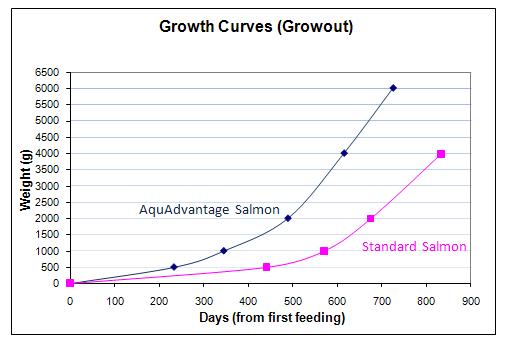
ENTER THE FRANKENFISHAs recently as this past October, the government held three days of meetings about whether to approve AquaBounty’s AquAdvantage® salmon – a transgenic species whose eggs are genetically engineered (GE) to grow twice as fast – for human consumption.    Some people have been referring to this product as the “Frankenfish”.

AquaBounty intends to market this product, making the following claim in its FDA application:
“AquAdvantage® Salmon (AAS) reach market size twice as fast as traditional salmon. This advancement provides a compelling economic benefit to farmers (reduced growing cycle) as well as enhancing the economic viability of inland operations, thereby diminishing the need for ocean pens. AAS are also reproductively sterile [except for the small breeding stock maintained in land, which eliminates the threat of interbreeding amongst themselves or with native populations, a major recent concern in dealing with fish escaping from salmon farms.  AAS grow faster and reach mature size earlier than standard salmon, but they do not grow to be larger. Mature AAS are indistinguishable from their conventional counterparts.”

The website www.eatocracy.com has provided an excellent summary of what alterations make this salmon different from typical “wild type” Atlantic salmon:
“The fish’s rapid growth will be boosted by the injection of a combination of a growth gene (GH-coding sequences) from the Pacific Chinook salmon and genetic material (the AFP gene) from the ocean pout – a large, eel-like fish – into the fertilized eggs of Atlantic salmon, making the recombined DNA present in cells throughout the body of the fish. The Chinook gene promotes the growth to market size, and the pout gene allows the fish to grow in the winter as well as the summer.” 
Growth rate comparison of an AquAdvantage® Salmon
vs. a non-transgenic (wild-type) Atlantic salmon.

Size comparison of an AquAdvantage® Salmon (background) vs. a non-transgenic
Atlantic salmon sibling (foreground) of the same age.
                  
So far, FDA has agreed with AquaBounty’s assessment that the salmon is as safe to eat as the wild variety, but they have not yet decided whether to approve the product.  If approved, this will be the first GE food animal available in US supermarkets!

PROS AND CONS

As you can imagine, this controversy stems from a number of pros and cons that are very important considerations as GE technology continues to increase.  Here is a quick summary, with a nod toward www.frankenfish.com for having compiled this information succinctly:


 ....... So, any guesses yet as to how this product gets approved and which part of FDA regulates it?  Stay tuned for this author’s next blog entry on Monday June 6th, 2011, in which he will walk through the different product types and why or why not the FDA regulates the Frankenfish in that manner.  In the meantime, share your guesses and your other thoughts about this product with us!

Monday, March 21, 2011

FDA Considers Regulation of Genetic Testing

Written by Gregg Mauriello - Validation Manager, QPharma

Over the past several years, an emerging market in direct-to-consumer (DTC) genetic test kits has developed.  DTC genetic kits give consumers the ability to freely gain access to their own genetic information without a doctor’s permission.  The FDA feels that marketing genetic tests directly to consumers introduces potential risks; with this information a patient can then make decisions that would have the potential to adversely affect their health.  There are many who believe that excessive regulations will raise the cost of DTC kits and will hinder the development of smaller genetic companies by raising the cost to start a new business.

Last year, Dr. Jeff Shuren, Director of the Center for Diseases and Radiological Heath (CDRH) presented the FDA’s recent activities related to DTC genetic tests to the House of Representatives.  He stated that: 
[the] “failure to validate the accuracy, reliability, and clinical implications of a test can    result in patient harm from misdiagnosis, failure to treat, delay in treatment, inappropriate treatment, or avoidable adverse events”
Since the test kit is considered an in-vitro diagnostic (IVD) test and is intended for use in the diagnosis of disease or other conditions, or in the cure, mitigation, treatment, or prevention of disease, the test kit is classified as a Medical Device.  Congress gave FDA the authority to regulate medical devices, including in vitro diagnostic tests in the 1976 Medical Device Amendments to the Federal Food, Drug and Cosmetic Act (FD&C).  An IVD test such as a genetic test kit may be classified as a Class III device and would be subject to pre-market approval requirements.  Only test kits that would be used for the diagnosis of disease or condition would be considered a medical device, a test kit to determine ancestry would not.  The FDA would also regulate the laboratory-developed tests (LDT) utilized to analyze the test kits to ensure the accuracy of the results.  In recent years, the FDA has found problems with LDT’s which include faulty data analysis, exaggerated clinical claims, fraudulent data, lack of traceability, poor clinical study design and unacceptable clinical performance.  The FDA feels that pre-market reviews of LDTs would ensure that tests are evaluated for analytical validity.  Validation of the tests would be important to reduce the risk of misdiagnosis and inappropriate treatment decisions. 

Excessive regulations would raise the cost of testing for the consumer.  Along with the higher cost, the FDA would also require a prescription for the test and a qualified practitioner would have to perform the test.  Currently, consumers order the test kit and can collect the samples to be tested in the convenience of their own home before sending the test kit off to the vendor for analysis.  Interpretation of the data would have to be performed by a qualified practitioner as well.  This lack of convenience may hinder the sales of genetic testing as well.

Is the FDA taking away the right for people to obtain their genetic code or are they looking to make sure that the public are obtaining the correct interpretation of this information?  Will regulation take the genetic testing out of the hands of the consumer and will it hinder the development of new innovations in the industry?  When the FDA approves the regulation of genetic testing kits, they will have to make sure that they find a balance to allow for the safety of the consumer, but allow the costs to stay affordable as well.

Monday, March 14, 2011

Who Wants a Strong FDA?

Written by Jonathan Wozniak - Validation Specialist, QPharma

Last Valentine’s Day (14 Feb 2011) saw the release of the United States Federal Budget for Fiscal Year (FY) 2012.  Included in this was a $4.4 billion budget request for the FDA.  This request represents an increase of approximately $1billion or 33% since 2010.  Budget proposals include increased investment in food safety initiatives, medical product safety, and regulatory science.  This announcement came mere days after House Republicans unveiled a spending bill that included a $241 million cut to FDA funding for the remainder of FY2011 as part of a $100 billion overall spending cut package.  The case for or against a strong FDA, however, does not divide clearly down party lines.  As professionals in an industry directly regulated, guided, and affected by the strength of the FDA, we are right to wonder:  who wants a strong FDA?

In March 2011, the Alliance for a Stronger FDA (an “alliance of patient groups, consumer advocates, biomedical research advocates, health professionals, and trade associations”) released a white paper entitled “The U.S. Food and Drug Administration: A Cornerstone of America’s Economic Future.”  (http://fdaalliance.files.wordpress.com/2009/11/fda_cornerstone_of_american_economy_final.pdf
In this report, the Alliance outlines a number of ways in which the FDA is critical to the future of economic growth.  The first main argument put forth in the paper is, roughly, this: 
  1. A strong FDA increases the safety and effectiveness of drugs and medical devices.
  2. Increased safety and effectiveness of drugs and medical devices increases consumer confidence.
  3. Increased consumer confidence fuels the industry; people buy more products from an industry they trust. 

The second argument suggests that a better-funded FDA will have more, better-trained employees (the FY2012 Budget Request claims 1,251 new employees could be hired).  This will expedite approval times and increase the frequency and effectiveness of inspections.  For example, the FDA has a two year backlog of generic drug applications due to funding restraints.  Better FDA funding means more employees tackling this paperwork.  This could result in an increased availability of generic drugs, which saves the consumer money and decreases overall health care spending in America.  The Healthcare Reform Act passed last year (H.R. 3590) also included a provision to remove the cap on members of the National Health Service Officer Corp and increase the National Health Service Corp budget by over $8 billion between 2010 and 2016.  This would increase the size and reach of the American public health response, but the program- like most current spending initiatives- is now in question.  The Alliance also points to the potential consequences of a weakened FDA, namely the increased potential for food borne illness outbreaks and increased frequency of drug and device recalls.

The FDA makes a number of strong claims to its effectiveness and importance: it creates jobs, increases safety and effectiveness of drugs and devices, increases consumer confidence fueling industry growth, and reduces health care costs.

However, the FDA is not without its critics.  There are many who believe the FDA is actually too strong, as it is.  The first major criticism is that raised by Republican spending cuts:  people everywhere have to tighten their belts in difficult economic times; the government should have to do the same.  Increases in FDA funding are not necessary, critics claim, because the system works fine as it is.  Increased spending on food safety is unnecessary as food borne illnesses are rare.  This is, generally speaking, the argument that a strong FDA costs too much.  Rep. Jack Kingston, Chairman of the House Subcommittee on Agriculture, Rural Development, Food and Drug Administration, and Related Agencies, commented after the passage of the Food Safety Bill in January, “There is a high possibility of trimming this whole package back… the system we have is doing a darn good job.”  He also noted our food safety rate is “very high, 99.99% safe”.  (http://www.foodsafetynews.com/2011/01/fda-food-safety-funding-still-on-chopping-block/)

The second major criticism of a strong FDA is that industry growth is actually stifled.  There were only 21 new drugs approved in 2010 (by 21 separate companies).  Extra clinical trials, extended review processes, and comparative effectiveness studies are just a few of the measures implemented by the FDA that actually deter companies from new product development.  The measures designed to increase safety and improve patient outcomes inherently delay approvals, and these delays cost time, money, and lives.  The potential stagnation of innovation in the industry creates opportunities for foreign markets to catch up to the American pharmaceutical and medical device industries moving jobs and revenue overseas. 

Meanwhile, FDA faces major statutory initiatives to introduce generic biologics and to require premarket clearance of tobacco products; lack of sufficient personnel to execute these programs could result in their getting shelved, or alternatively, firms facing endless delays; these two alternatives will definitely make some people happier than others, but will increase uncertainty no matter who winds up the winner.

So where should we stand?  As professionals in the industry it remains hard to say and might actually vary depending where we work.  Drug and device makers might appreciate a weakened FDA in the short term.  Inspections, warning letters, and sanctions would be fewer and farther between.  Pre-market approval processes could be restructured to facilitate new product release.  Drugs not subject to strict comparative effectiveness studies will remain on the market longer.  These parties, however, should not forget that approvals may take longer in an understaffed agency, and the potential for recalls increases with an expedited approval process.  (http://www.latimes.com/health/la-na-medical-devices-20110215,0,4206876.story

As a consulting firm dealing largely in compliance and regulation, it would seem on the surface that a more active and involved FDA would create more work for us.  The more inspections, rulings, warning letters, and white papers- the more work there is for us helping our clients comply.  We would not be shortsighted, however, and ignore the possibility that a strengthened FDA could stifle industry.  After all, a company not making money is not hiring consultants. 

As experts in industry, we have a responsibility to keep an eye on the strength of the FDA – especially in a time of complicated economic turmoil and incremental health care overhaul.  We can help our companies position themselves better for change when we are able to anticipate shifts in the strength of the FDA as a regulating body and what they will mean for industry.  A large part of our doing business—from staffing, to setting rates, to training—depends on where and how we anticipate the FDA to act; while the strength of the FDA, predicated by its funding and staffing, largely determines its reach and impact.

Monday, March 7, 2011

Purchasing Medications Online

Written by Teresa Jaworski - Subject Matter Expert, QPharma

Using the Internet to purchase items has become a very popular and convenient way of acquiring things we need without leaving the comfort of our homes.  In addition, the Internet allows us to browse many different websites quickly so that we can compare costs and buy products at the most affordable prices.

However, when purchasing medications online, we should be very cautious.  You could purchase a drug that is not safe and put your health at risk.  Many websites that sell medications online are not US state-licensed pharmacies or are not pharmacies at all.  Therefore you run the risk of purchasing counterfeit medicines that contain dangerous ingredients; are not manufactured according to standards; contain the incorrect dosage of ingredients; are contaminated; are not labeled, stored or shipped properly; or have expired.  Counterfeit drugs are illegal!

The FDA issued a draft guidance document dated July 2009, Draft Guidance for Industry: Incorporation of Physical-Chemical Identifiers into Solid Oral Dosage Form Drug Products for Anticounterfeiting, which will provide guidance for pharmaceutical manufacturers in using inks, pigments, flavors, and other physical-chemical identifiers (PCIDs) when making a drug product in solid oral dosage forms.  The use of PCIDs will make it more difficult to counterfeit a drug thus making it easier to identify a genuine version of the drug.  According to an FDA News Release dated July 13, 2009, “Drug counterfeiting is a serious public health concern,” said Commissioner of Food and Drugs Margaret A. Hamburg, M.D.  “We look forward to working with industry to help ensure that consumers are not exposed to products containing unknown, ineffective, or harmful ingredients.”

A PCID is a substance or combination of substances with a unique physical or chemical property used to identify and validate a drug product.  According to FDA, a substance used as a PCID should not adversely affect the identity, strength, quality, purity, potency, or bioavailability of the drug product.  The PCID can often be detected by wholesalers or pharmacists however, in some cases an analytical instrument may be necessary to detect the PCID in order to determine if the drug products are genuine.

The FDA expects that most of the impending PCID ingredients are already being used as food additives, colorants, or other types of inactive ingredients and have already been established as safe.  FDA recommends using the lowest amount of PCID that allows for identification of the product and recommends that the PCID be a substance with no medicinal effect.  Refer to the draft guidance document located at www.fda.gov for additional information.

In a recent FDA News Release, the FDA warned consumers about a potentially harmful product, “Generic Tamiflu.  The product did not contain Tamiflu’s active ingredient, Oseltamivir, but Cloxacillin, an ingredient in the same class of antibiotics as Penicillin.”   FDA warned that using this product could result in an allergic reaction for patients that are allergic to penicillin including “a sudden, potentially life-threatening reaction called anaphylaxis, with symptoms that include difficulty breathing, chest tightness, swelling of the throat or tongue, hives, dizziness, loss of consciousness, or a rapid or weak pulse.”

Upon learning of the so called “Generic Tamiflu”, FDA purchased a package of the product without a prescription from a website that claimed to be an online drugstore.  The “Generic Tamiflu” was received in a postmarked package from India.  The product was stored in two blister packages with foil-backing labeled “Oseltamivir Phosphate 75mg. Capsules TM-FLU Capsules” and “Manufactured by: TRYDRUGS Pharmaceuticals PVT. LTD.”  An FDA-approved generic drug for the prescription drug “Tamiflu” does not exist.

In another FDA News Release, dated January 25, 2010, the FDA warned consumers about a counterfeit version of the weight-loss drug Alli being sold at online auction sites over the Internet.  FDA indicated that this counterfeit product was unsafe and illegal.  “Alli is an FDA-approved, over-the-counter weight-loss drug that contains Orlistat as its active ingredient. The counterfeit version of Alli does not contain Orlistat; instead it is made with varying amounts of Sibutramine, a stimulant drug.”  Laboratory testing completed by FDA determined that the dosing directions specified a dosage of three times the usual daily dose of Sibutramine, which could result in elevated blood pressure, stroke, and heart attack for people with a history of cardiovascular disease.  Additionally, healthy people taking this product could suffer anxiety, nausea, heart palpitations, racing heart, insomnia, and small increases in blood pressure.


FDA continuously monitors the Internet and even makes purchases so they can test the drug products to verify product authenticity.  However, consumers need to protect themselves as well by knowing how to recognize a genuine internet pharmacy.  A genuine internet pharmacy will be licensed by the U.S. Board of Pharmacy and will follow the relevant laws and regulations.  In addition, the National Association of Boards of Pharmacy Verified Internet Pharmacy Sites Seal (VIPPS Seal) provides a seal of approval to pharmacy sites that meet state license requirements.  A pharmacy that carries this seal can be found at www.vipps.info.

Monday, February 14, 2011

Managing the Validation of Custom Databases

Written by Frederick Sperry - Validation Manager, QPharma


The management of custom databases does not need to be an onerous task.  When taken seriously, one can justify the management of the details associated with the database as Good Business Practices.  Even the elephant can be eaten – one bite at a time. 

Initially, as in any other activity in the regulated industry, know your process.  Identify the key parameters that user requirements have defined for the database.  What are the macros supposed to be doing, or any critical connections or formulas expected to produce?  Document the findings as an initial deployment of the system, and get a system user review and approval of the requirements for the database.

Validate your process.  Document the settings and verify the any formulas, macros of interfaces do what they are supposed to accomplish.  Adjust any settings that do not meet the needs of the end users.  Then update your documentation, and get review and approval signatures of the documentation.  Typically this is in the form of a System Design Specification, System Configuration or Functional Specification document.  The title of the document is not important; the current information is the critical item.

After the ‘deployment’ of the database keep the documentation current.  The database configuration and settings are liable to change over the course of normal system usage.  Keep track of the changes and periodically update the system documentation, and obtain the crucial user or management review, approval and sign off of the updated system settings.

Keep current with the data and database and embrace the new era paradigm shift from documentation to information.  The documentation must empower the system users to be able to use the information as knowledge.  In this new millennia day and age of information, knowledge is truly power.

Tuesday, February 8, 2011

The Twelve Towers - A Project Management Novel: Excerpt 2 – Identify Stakeholders

Written by Bruce Fieggen - VP of Project Management & Training

Below is the second excerpt from the Project Management novel Bruce Fieggen, QPharma’s V.P. of Project Management, is writing in his ‘spare time’. The book follows the Project Management Body of Knowledge Guide (PMBOK) but uses the format of a novel, and promises to be much more readable. The novel tells the story of a Gwilym, a Project Manager, charged with building twelve towers scattered throughout King Arthur’s Britain. Gwilym’s oldest son, Bleddyn, also appears in this excerpt. There is some overlap between this excerpt and the one posted November 1 2010, so you can see where it fits in the novel. 

Readers, think about the various projects you are tasked with and see how you can use the tools shown in these blog posts to assist you in ‘building your towers’.

This second excerpt shows the development of the second tool: The Stakeholder List.


 King Arthur stood, gravely shook Bleddyn’s hand, then Gwilym’s and told them he would be keeping a close eye on this tower and on them. “And there is no need to worry about Tarrant. I didn’t trust those beady eyes when he came here. You, I trust.”

Gwilym and Bleddyn were asked to join in the feast in exchange for a tale to add to the merriment. He told a story of his travels as a young man. “I was in a bazaar in an Arab town near the Holy Land”. This caught all the knights’ attention. “The men there sold their wares to all comers and it was to their advantage to guess the language of their customers as they walked by and to speak to them in that language with what little they could pick up. I passed a seller of brass-works in a street full of brass. He looked at me, smiled and shouted, in highly accented English, ‘Just looking! Just looking!’ He must have heard these words so many times from other Englishmen he became sure this was a greeting of some kind.”

The knights roared in laughter and toasted Gwilym, begging for more stories. He obliged them once, then turned the conversation back to them and listened to their stories until he saw his son stifling his third yawn. “I must return early on the morrow, gentlemen. Thank you so much for your hospitality. My king; thank you for the royal charter. I shall not disappoint you.”

Bleddyn walked by his father’s side on their way to the tavern, looking up at him with a new respect. “Did you really have those adventures, Da? I never knew you had traveled so far. Was I with you?”

“No lad. That was during my misspent youth. I did many dangerous and fool-hardy things at that age that I don’t want you to try. Please forget the stories.”

“But Da, what did your father say about the things you did while you were traveling?”

“My Mother and Father were dead when I was quite young. I did no-one else’s bidding at that age.”

                           ___________________________

At the second cock crow, they left Caerleon, arriving at the ferry dock in time to see the boat approaching from Brycgstow. While they waited, Bleddyn asked his father about the charter.

“It’s a document that describes the project to everyone who cares about it. That way there can be no arguments about what to do. It’s also a contract between all the people who work on the project and King Arthur. And that includes me. I have to make sure I build it for the amount of silver I promised and as quickly as I promised.”

“Who are all these people who care about the project?”

“The quarryman is one. He’s the one who started this whole thing and caused me to make up the charter. I’ll be looking forward to showing him King Arthur’s signature. But there will be others who argue in the future and I can show them the charter at that time.”

“Why not show them the charter first, Da, before they make any trouble?” Bleddyn questioned. “That might save some time.”

“That’s a grand idea, son! Let’s make a list of everyone we should show it to while we wait. There are all the builders on the site, Father Drew, the quarryman, the bishop, the forester, the masons, the carter, the village chief, the inn-keeper who brings food to the site. Who else?”

“What about Tarrant?”

“Now that’s an interesting point. I should also be thinking of people who want the project to fail. I’ll have to keep them in mind for this list of people who care. Though I may not go out of my way to find him, I’ll keep the charter safe so I can show him if he argues again. It clearly says who’s in charge.”

“What do you call this list of people, Da?”

“They are all people who have a stake in this project, one way or another. I’ll call it a list of ‘stakeholders’ then.”

The ferry arrived and they made their way back to Brycgstow and spent the rest of the day and night there. Gwilym hobbled from square to square, sitting down in each and allowing Bleddyn to explore each place. He was exhausted when they returned to the tavern and fell immediately to sleep. Bleddyn, his mind racing from all he’d seen, lay awake for another hour, and then fell into a contented sleep.

They arose early again and rode as fast as Gwilym was able to the quarry near Huish, and found the quarryman hard at work in the pit.

Tuesday, January 25, 2011

Validation as a Best Practice – Part 2

Written by Scott Collins - Sr. Validation Manager

Several months ago I wrote about why validation is a best practice with a link to Part 1 of a presentation on how to complete a validation.  This time I will summarize the activities associated with completing a validation and provide a link to Part 2 of the same presentation.

In Part 1 of the presentation, Validation as a Best Business Practice – Part 1I stated the first steps for a validation project: Validation Project Plan and the User Requirements Specification (URS).  While the Validation Plan may or may not be required depending upon the project, the URS is critical for all validation efforts.  This document provides the team as well as the equipment or system developer with enough information to provide an end product that meets its intended use.  Each requirement must be clear, concise, specific, non-conflicting with other requirements, and most of all testable.

For best results the next two steps should be completed with help or input from the developer or vendor.  The next document to be developed is the Functional Requirement Specification (FRS).  The FRS addresses at a high level how each requirement will be met by the equipment or system.  This is best answered by the developer or vendor.  The FRS is also a great tool for deciding which developer or vendor to use, so very often a customer will supply the URS to many developers or vendors and make their supplier decision based on the FRS.  Once a developer or vendor has been identified, each functional specification is detailed in the Design Specification (DS).  The FRS can be expanded into the DS to reduce the number of documents and to make sure that each functional specification has been addressed.

After the DS has been created, the developer or vendor can build or supply the equipment or system.  If the equipment or system is being built, then the customer should insist on a Factory Acceptance Test if possible.  Keep in mind that it may not be practical to perform and FAT on a major utility system or an off-the-shelf system.  Major utility systems are too big and need t be installed in their final location before performing testing and an off-the-shelf system has been tested at many client sites so there is little chance that it will not work once installed at the final location.  The FAT allows for the developer or vendor to work out the bugs in the system before installing at the client site.  It also allows the client to test the system for their intended use at the developers or vendors site so any bugs or changes can be addressed quickly and easily, and usually without additional cost to the client.

Once the FAT is completed and all issues addressed, the equipment or system is delivered and installed at the client site.  After everything is set up, but before the developer or vendor leaves, the Site Acceptance Testing (SAT) should be completed.  The SAT usually reruns the FAT tests.  This proves that nothing was changed or affected by breaking the equipment or system down and shipping to the client site.

Another activity that should be completed before the developer or vendor leaves or is given the final payment is Commissioning.  Commissioning usually involves the developer or vendor performing their checks and tests on the equipment or system.  Be sure to get the executed documents for your records.  If you intend to use the Commissioning document to support less testing later on, then you need to have the documentation meet your internal standards.

Now that the equipment or system has been installed, the validation testing can begin.  The validation testing involves Installation Qualification (IQ), Operational Qualification (OQ), and Performance Qualification (PQ).  These documents can be combined into one if preferred.  Some companies insist on these being separate documents to force the team to complete one phase before moving to the next phase.  The critical point to make here is that the tests that are developed are clear, concise, and test, at a minimum, all of the critical user requirements.

The best way to make sure all requirements have been tested is by developing Traceability Matrix.  The Traceability Matrix can be a table that lists each requirement with its unique number down the left column, the next column includes the Functional Specification number(s) that address each requirement, the next column lists the Design Specification number(s) that address each Functional Specification, and the last column lists the protocol and test number(s) that verify each Design Specification.  For more detailed information please review the Validation as a Best Business Practice – Part 2 presentation.  

Following this process, even at a high level will help insure that you have a piece of equipment or system that meets your intended use.  This is one critical part to ensuring that your product meets the critical quality attributes determined during the development phase of the product lifecycle.  This is why Validation is a best business practice.